Local Water Quality Information

Know what’s in your local water—so you can protect your home and your family.

Your water doesn’t come from “somewhere.” It comes from your city’s source, your plumbing, and your home’s specific conditions—and that means water quality can vary a lot from one town (or even one street) to the next.

At Angel Water, we keep this simple: you deserve the truth about your water and a clear plan to fix what’s not working. Whether you’re dealing with hard water, strange tastes or odors, staining, dry skin, or you just want peace of mind, this page will help you understand local water quality—and what to do next.

Why local water quality varies (even nearby)

Local water quality is shaped by a few big factors:

  • Water source: surface water (lakes/rivers) vs. groundwater (wells/aquifers)
  • Treatment methods: what your municipality uses to disinfect and manage water chemistry
  • Infrastructure: older pipes and distribution lines can impact what reaches your tap
  • Seasonal changes: rainfall, drought, temperature, and algae cycles can change taste/odor
  • Home plumbing: old pipes, water heaters, and fixtures can affect water at the point of use

That’s why two neighbors can have two different experiences—one has spotless glassware, the other has film, scale, or staining.

Bottom line: A city water report is a helpful starting point, but it doesn’t tell the full story of your water at your tap.

Local water quality by state

Angel Water serves customers in Illinois and Florida, and both regions have unique water characteristics. Use these guides to explore what’s common in your area.

Illinois Water Quality by City

Illinois homes often experience issues tied to hardness, mineral content, and aging infrastructure in some communities. If you’re seeing scale, cloudy glassware, or dry skin and hair after showering, start here.

Florida Water Quality By City

Florida water can vary dramatically based on local source and region. Some areas may deal with mineral-heavy water, sediment, taste/odor concerns, or other local factors. If your water has a strong taste, smell, or leaves residue, start here.

Common signs your local water may need attention

You don’t have to be a scientist to notice when something is off. Here are common local water quality problems homeowners report—and what they can mean.

Taste and odor issues

Chlorine or “pool water” taste/smell

Rotten egg / sulfur smell

Musty or earthy odor

Metallic taste

Hard water symptoms (very common)

White spots on dishes and glassware

Scale buildup on faucets and showerheads

Soap that won’t lather well

Dry, itchy skin and dull hair after showering

Stiff towels and fading laundry

Staining and discoloration

Rust-colored stains in sinks/tubs

Blue/green staining near fixtures

Black specks or sediment in water

Appliance and plumbing headaches

Reduced water pressure from buildup

Water heater inefficiency

Shortened life of appliances that use water

If any of these sound familiar, your water is telling you something—and it’s worth finding out exactly what’s causing it before you spend money on the wrong solution.

How to understand your local water (the right way)

If you’re researching “water in my area,” here’s the most reliable approach:

1) Start with your city or county water information

Municipalities publish annual water quality reports (often called a Consumer Confidence Report). This can tell you the source, treatment methods, and general results.

2) Identify what’s happening at your home

A city report won’t account for neighborhood infrastructure, home plumbing, seasonal shifts, or changes after water sits in pipes.

3) Confirm with a proper water test

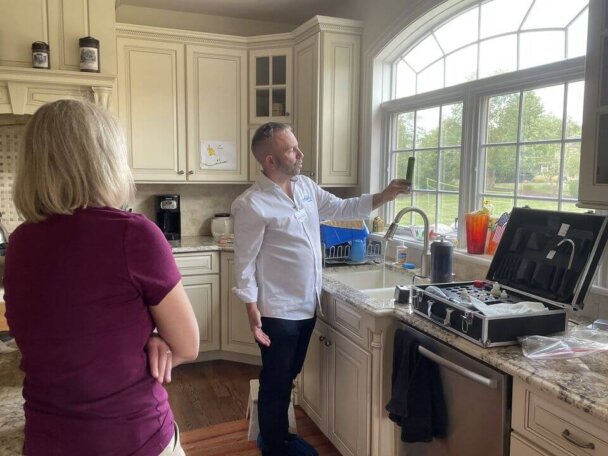
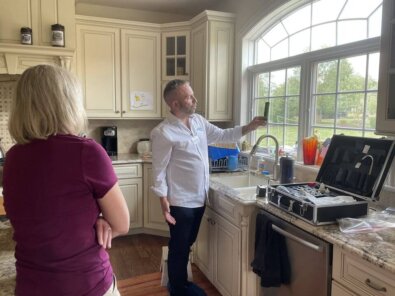
A real solution starts with real data. Our goal isn’t to “sell you something.” It’s to understand what’s in your water, explain it in plain English, and recommend only what your home actually needs.

Local Water FAQs

Below are quick answers. For the full list, visit the FAQ page.

Is my city water safe?

“Safe” on paper doesn’t always mean it’s ideal for taste, odor, skin, appliances, or peace of mind. If you’re noticing symptoms (scale, smell, staining), it’s worth testing.

Why does my water smell like chlorine?

Many municipalities use disinfectants to treat water. Some homes notice it more than others depending on distance from treatment, season, and plumbing.

Why do I get white spots on dishes and shower doors?

That’s a classic sign of hard water minerals. Over time, this can also contribute to scale buildup in plumbing and appliances.

Can water quality change during the year?

Yes. Weather patterns, seasonal treatment adjustments, and source changes can all affect your water.

Do I need a filter or a softener?

It depends on what’s actually in your water and what problems you’re trying to solve. A test prevents wasted money on the wrong equipment.

What’s the best first step?

A local water test—so you can make decisions based on facts, not guesswork.

Video Resources

Prefer to learn by watching? We’ve put together short videos that explain local water issues in plain English—what they are, how to spot them, and what solutions work.

Get Started With a FREE Water Test

Just fill out the form below and we will reach out to
schedule the best time for your free water test!

Andrew Wilson, CEO of Angel Water
×Close
Find Out What’s Really In Your Water!
Get a FREE Water Test!

Angel Water is rolling out a FREE Water Testing Program to support our mission to provide cleaner, healthier water to as many people as possible!

Andrew Wilson, CEO of Angel Water
×Close
Before You Go…
Get A FREE Water Test!

Angel Water is rolling out a FREE Water Testing Program to support our mission to provide cleaner, healthier water to as many people as possible!

Andrew Wilson, CEO of Angel Water
×Close
I would like to schedule service on my existing equipment.
I am interested in testing my water or I have questions about equipment.
Are you in Illinois or Florida?